The land, again
Aratoi Wairarapa Museum of Art and History 31 Jan - 19 April 2026
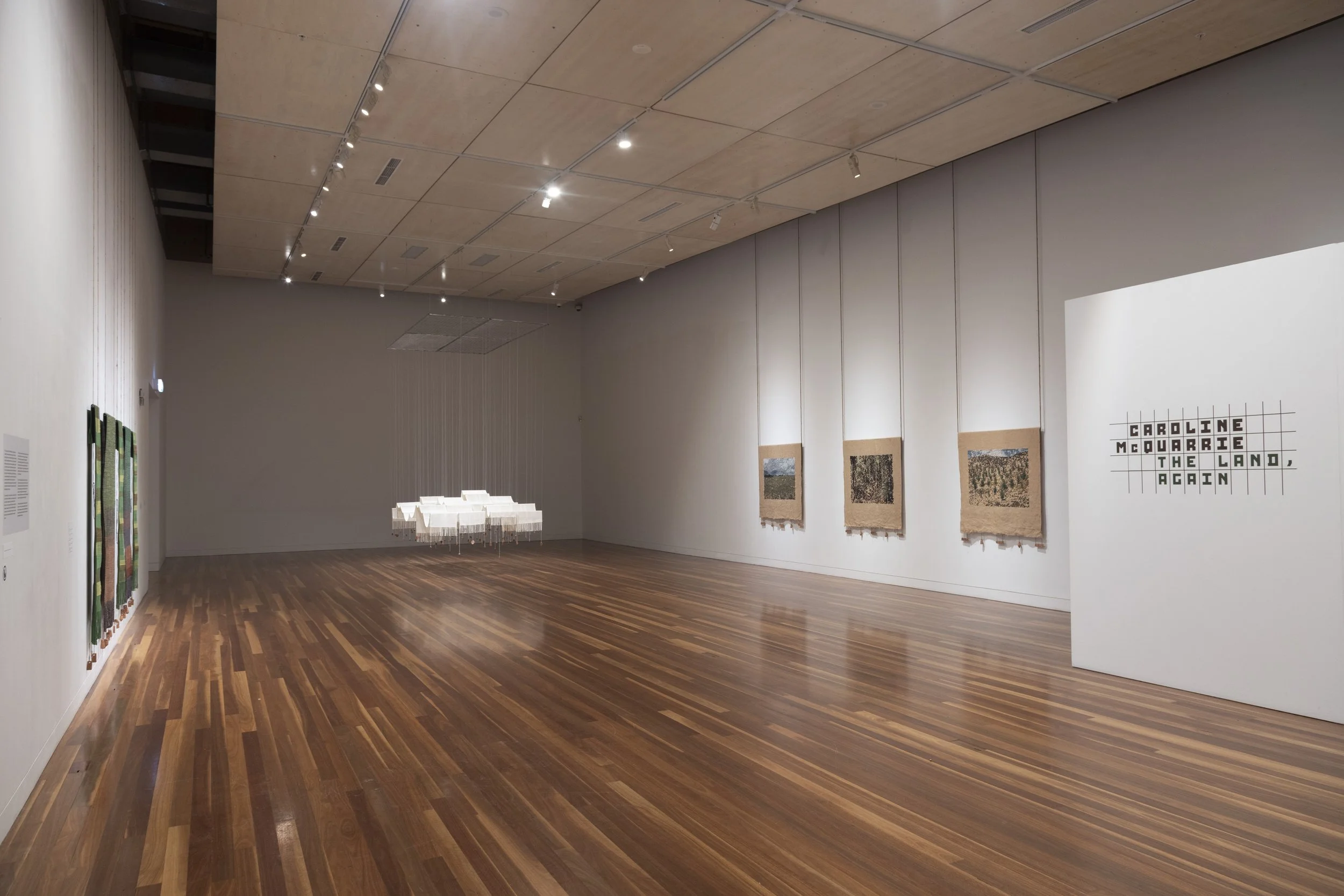
In ‘The land, again’ Caroline McQuarrie challenges us to consider how we view land and landscape. Tracing one history of land use in Aotearoa New Zealand, the exhibition, which is created almost entirely from wool, depicts sheep farming landscapes which we are encouraged to consider as human-made constructs. Utilising weaving and cross stitch at an expanded scale, the works reflect both human-centric ways of viewing landscape, and the differing ways we conceptualise land as its cultural value changes when economic imperatives shift. McQuarrie asks how our understanding of these landscapes alter as they are further converted for the regeneration of native bush or economic diversification into forestry.
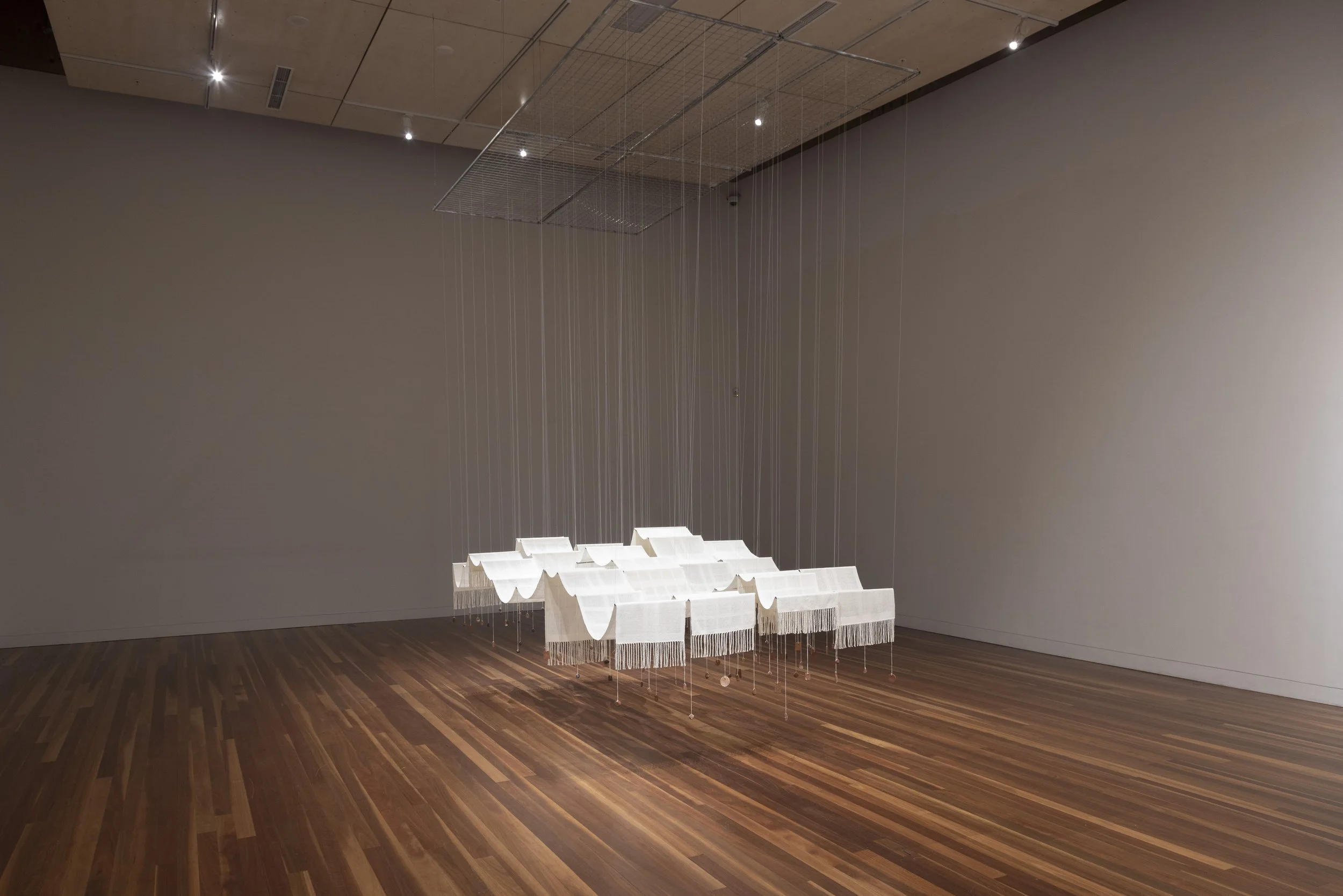
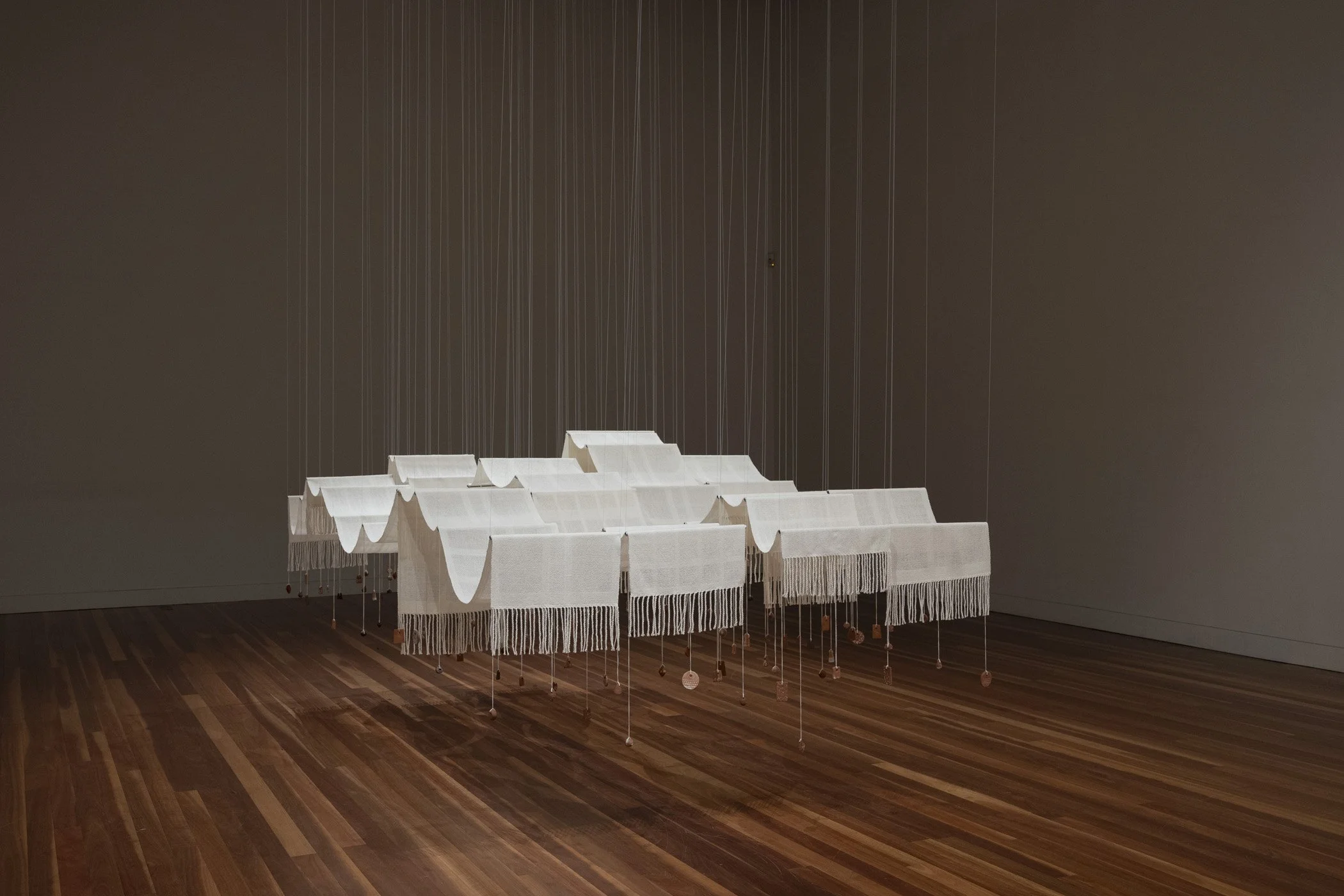
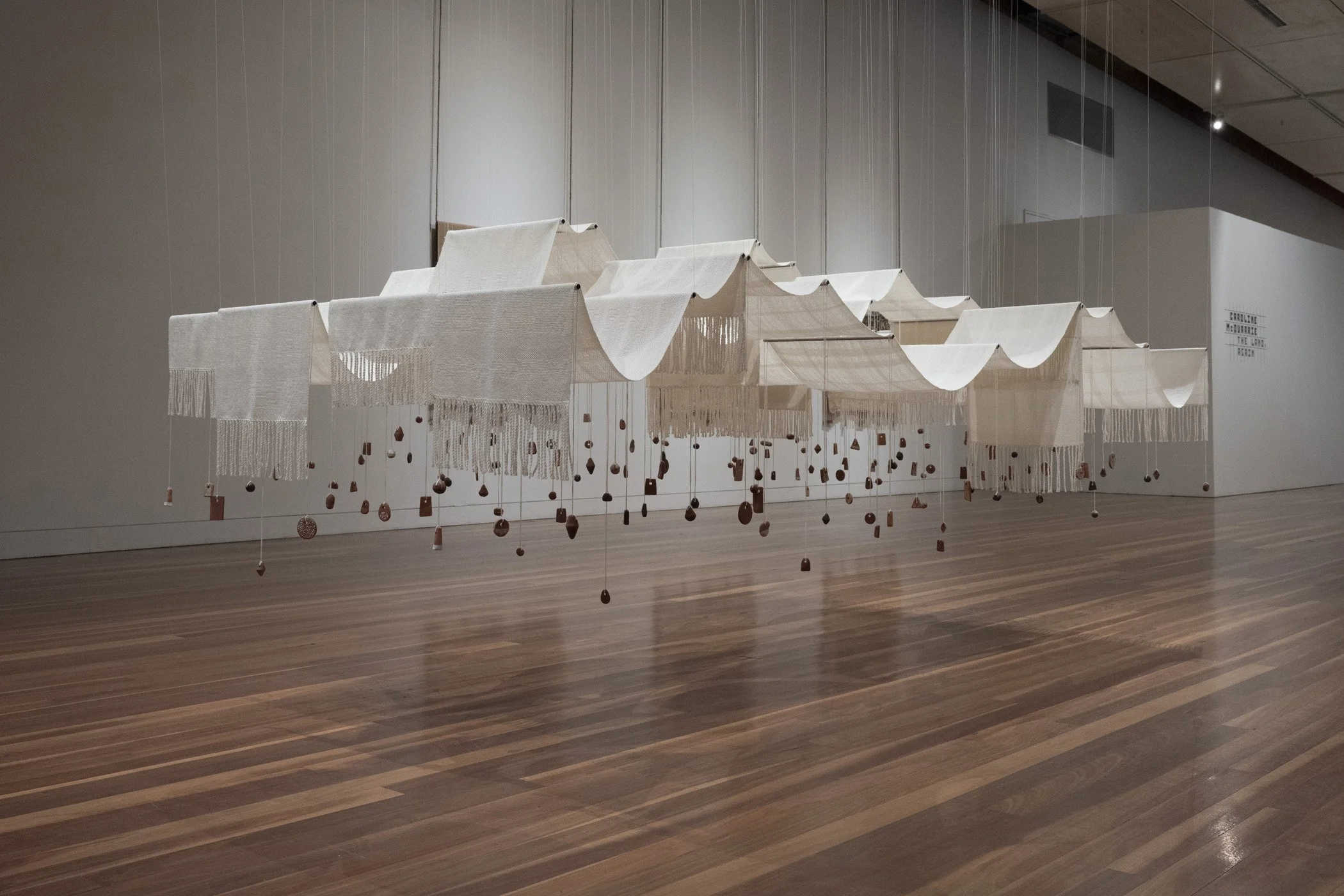
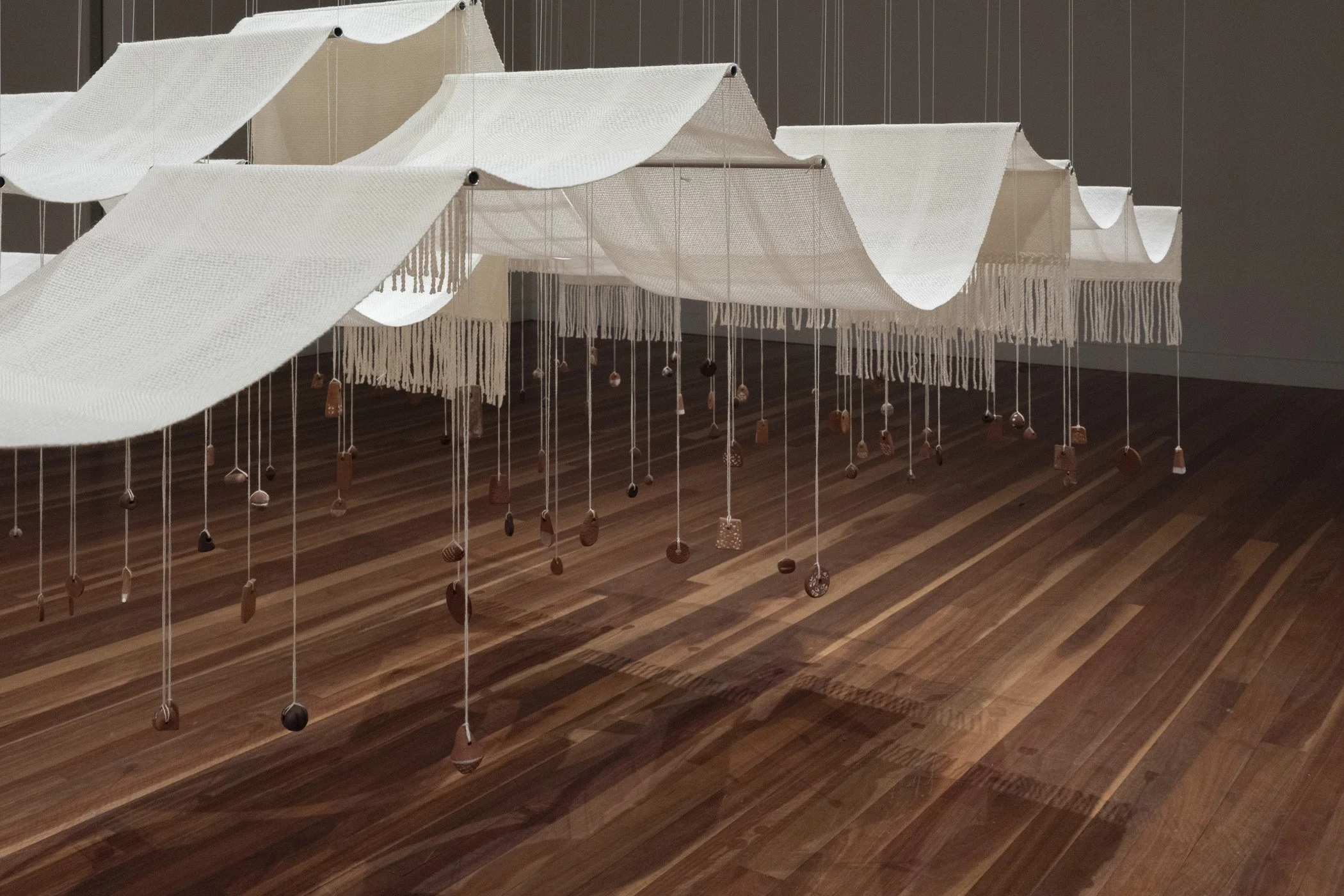
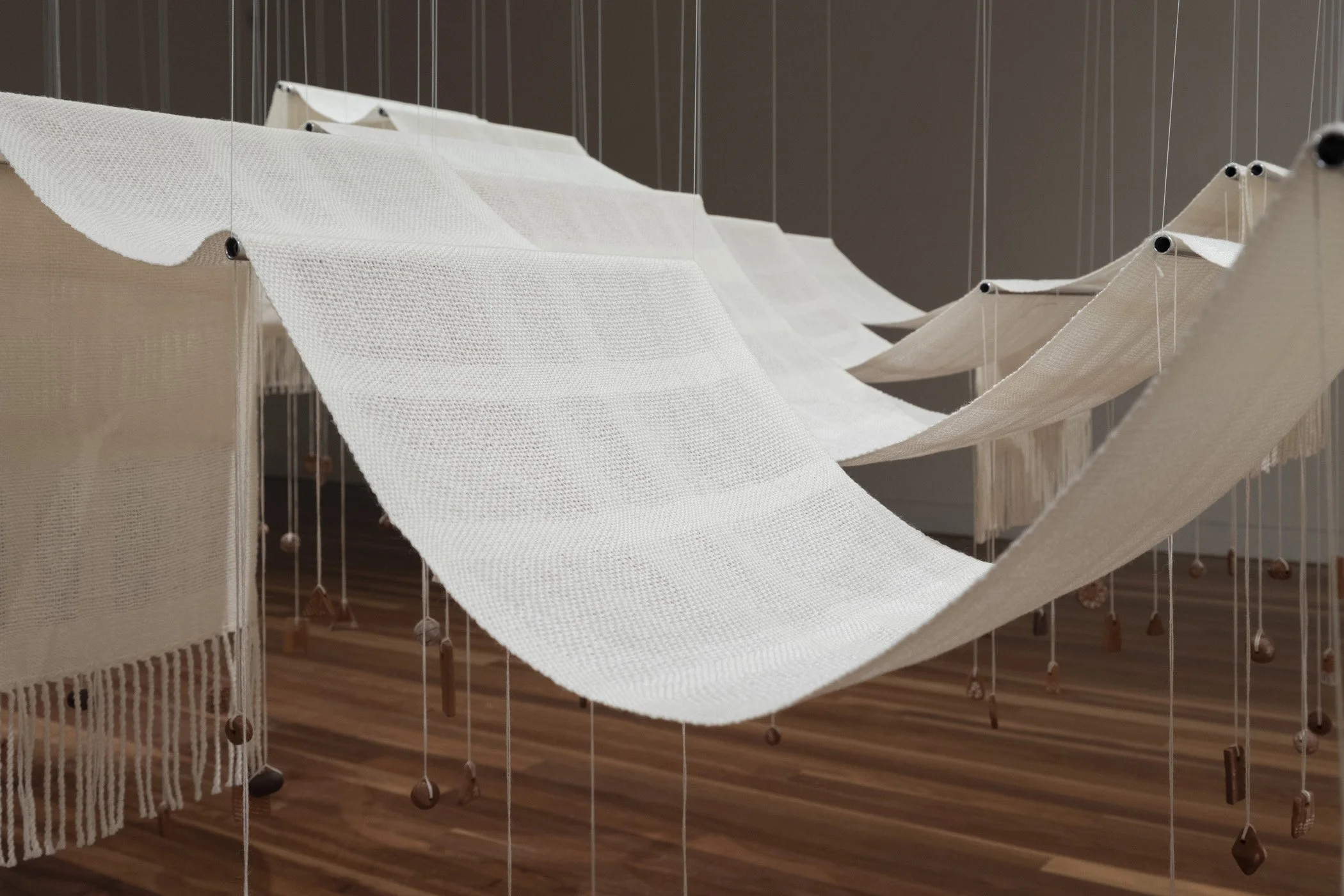
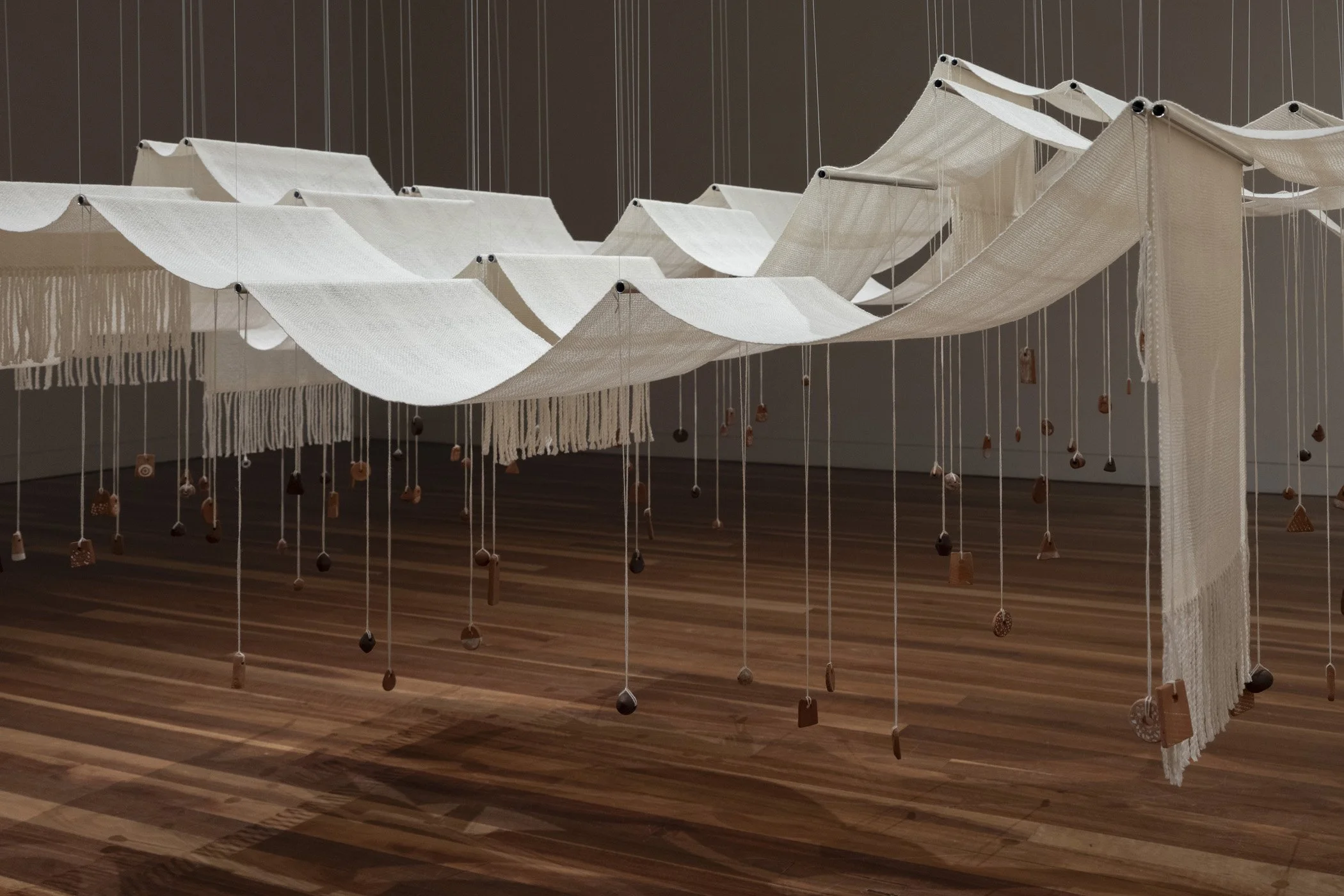
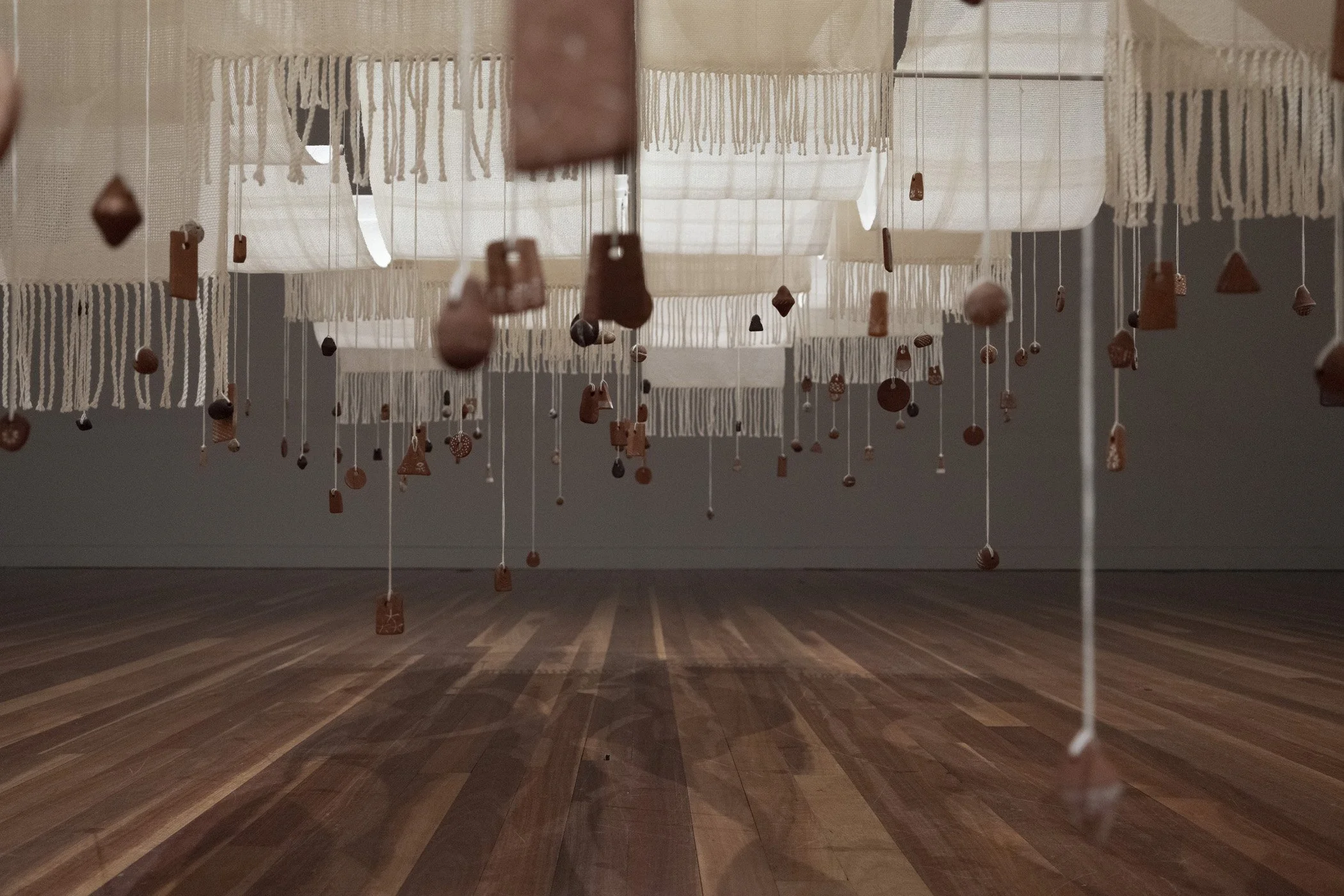
The central work, Throwing the fleece, is a network of strips of woven fabric that undulate to create a landscape of wool in the centre of the gallery. In monochromatic white it reminds us of the monocultural Pākehā lens farmed land is framed and viewed through in Aotearoa New Zealand. Its present use is thinly draped over the land, with a complex history and roots system existing below the pure white surface.
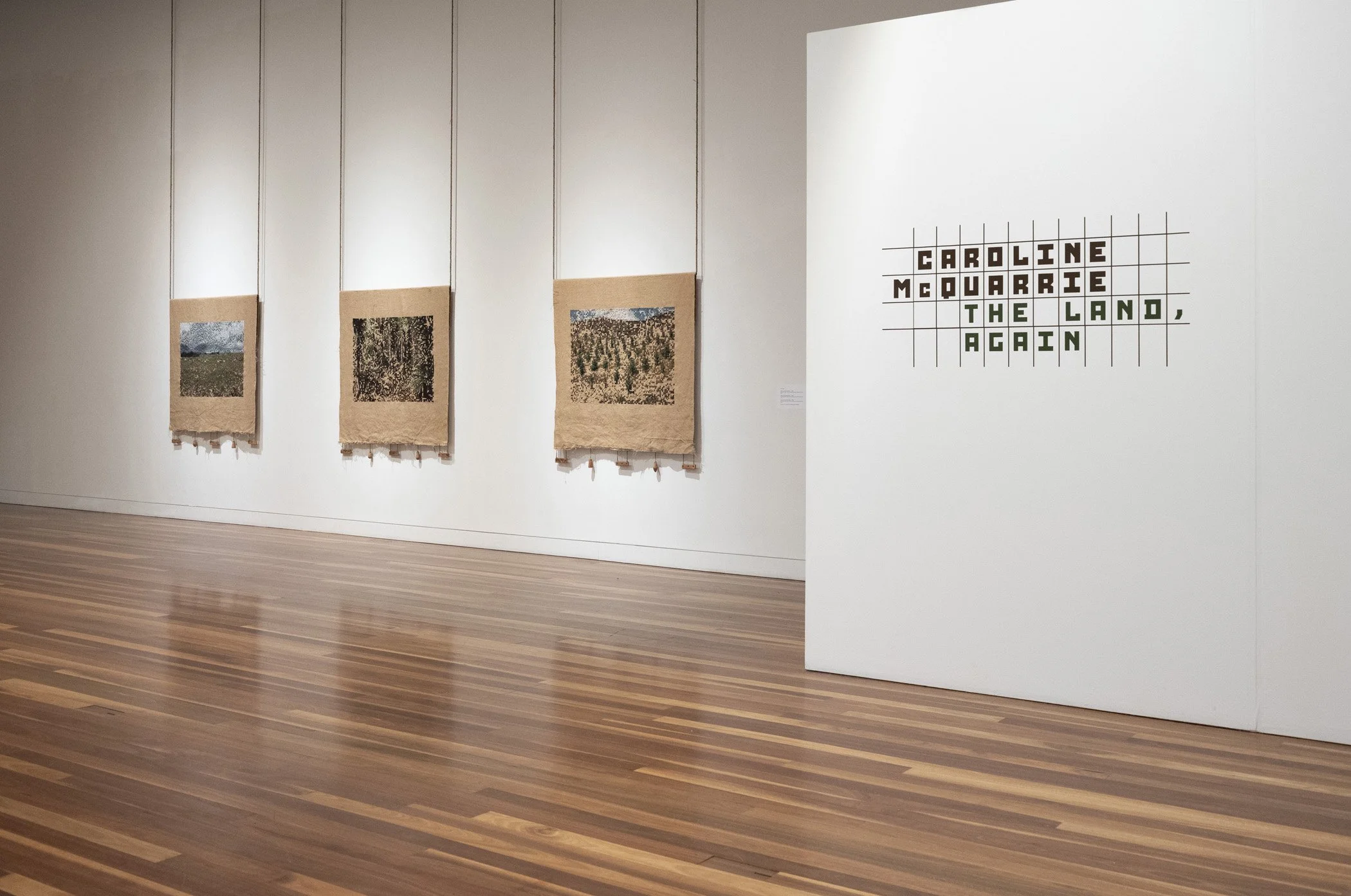
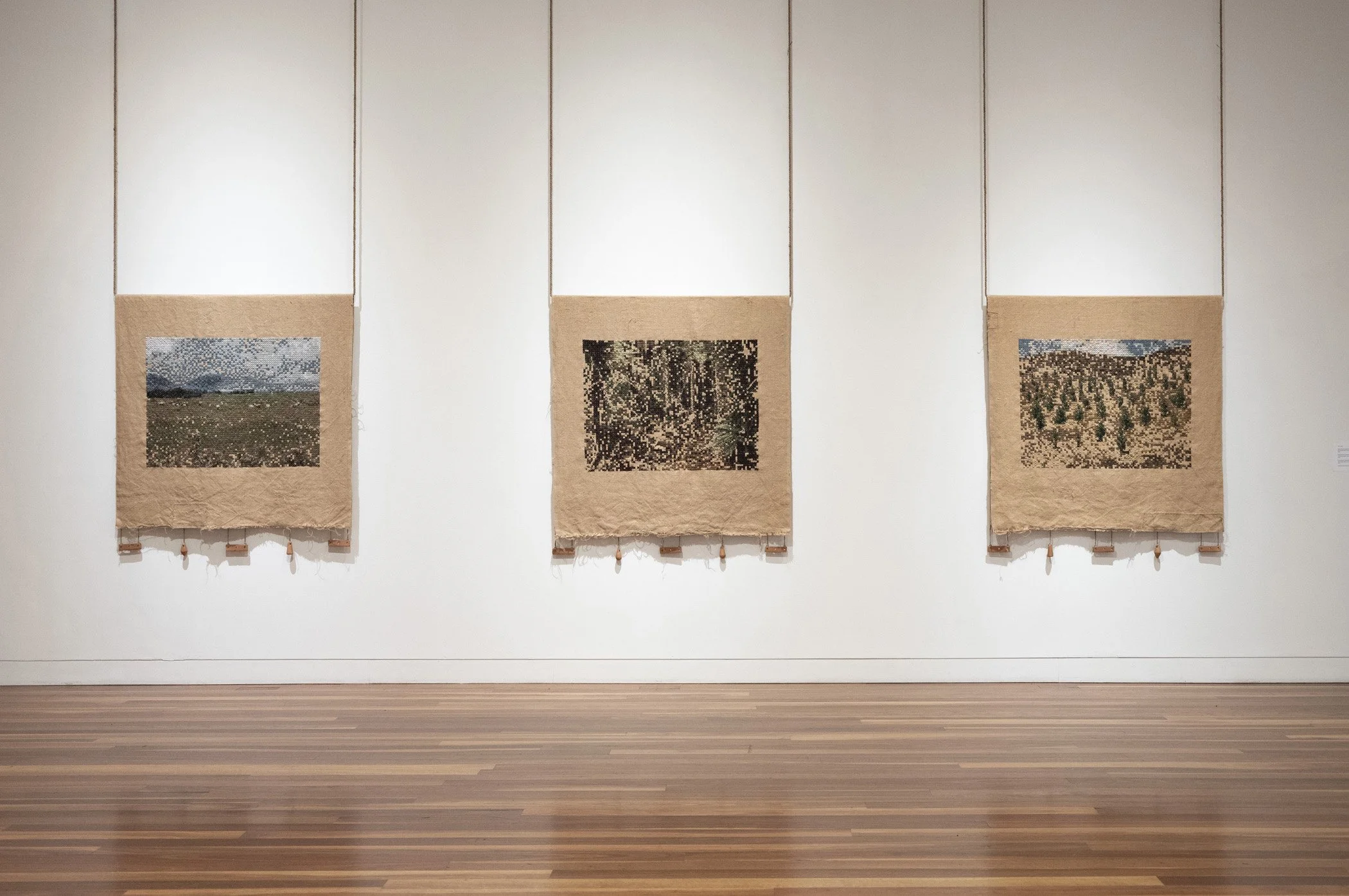
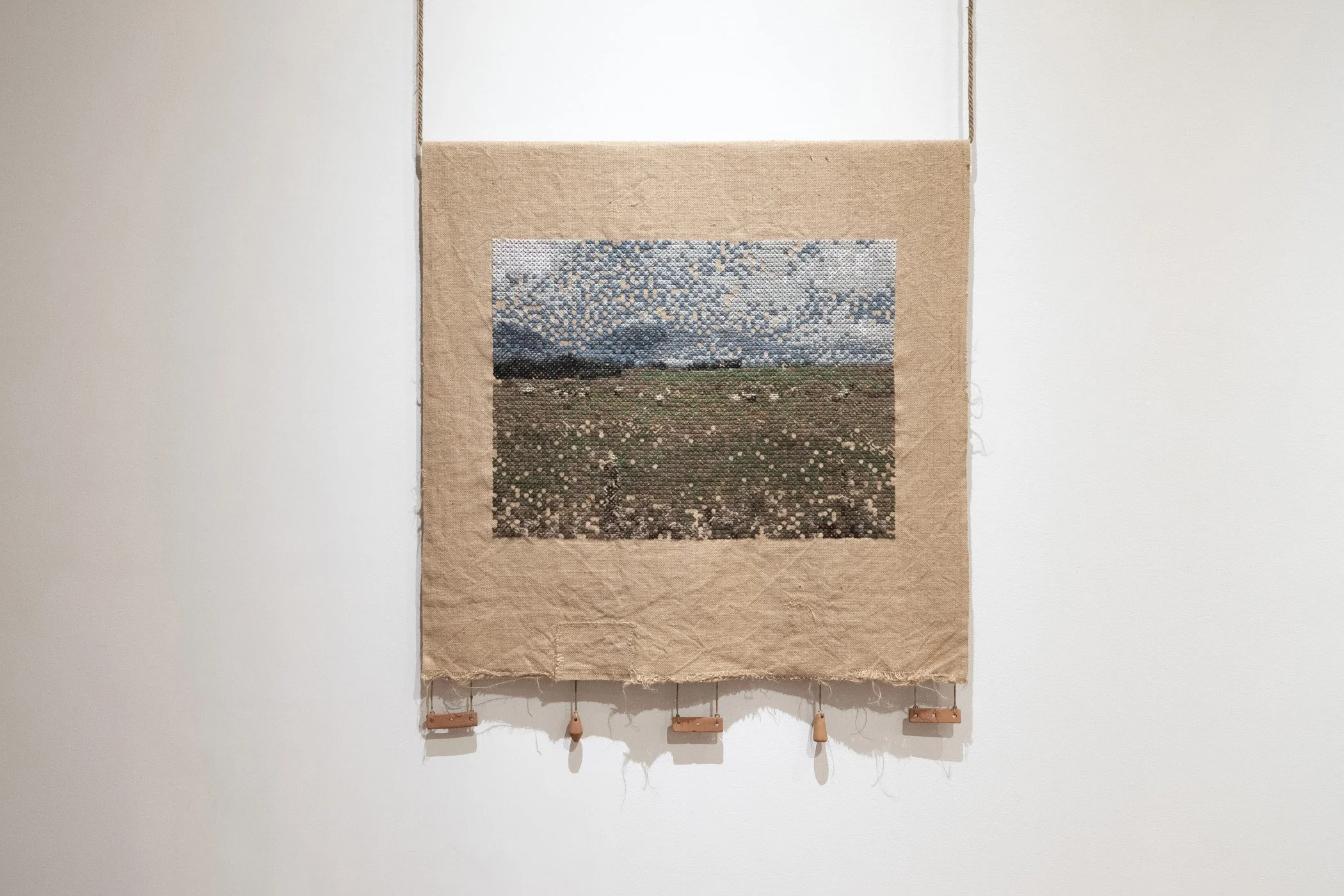
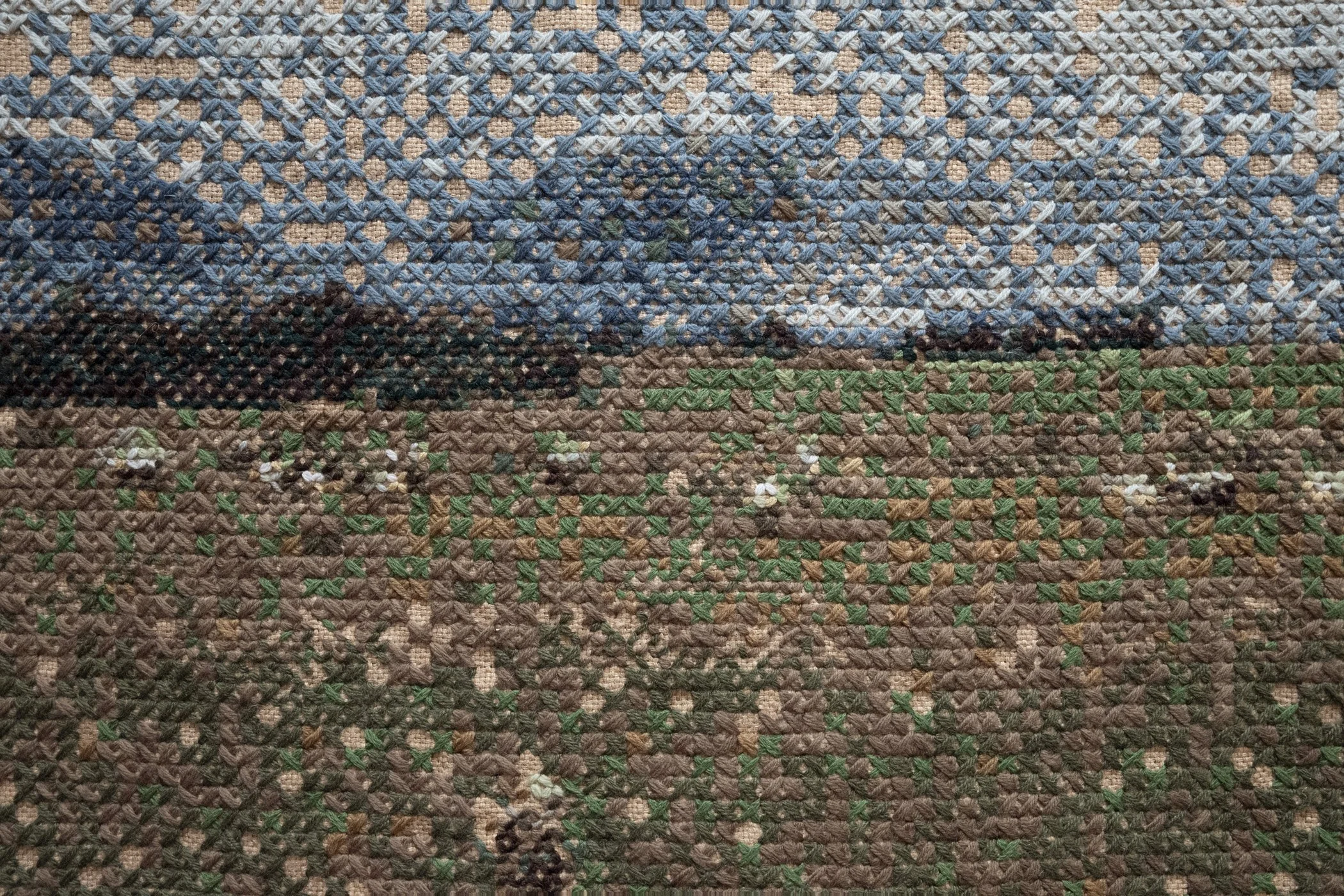
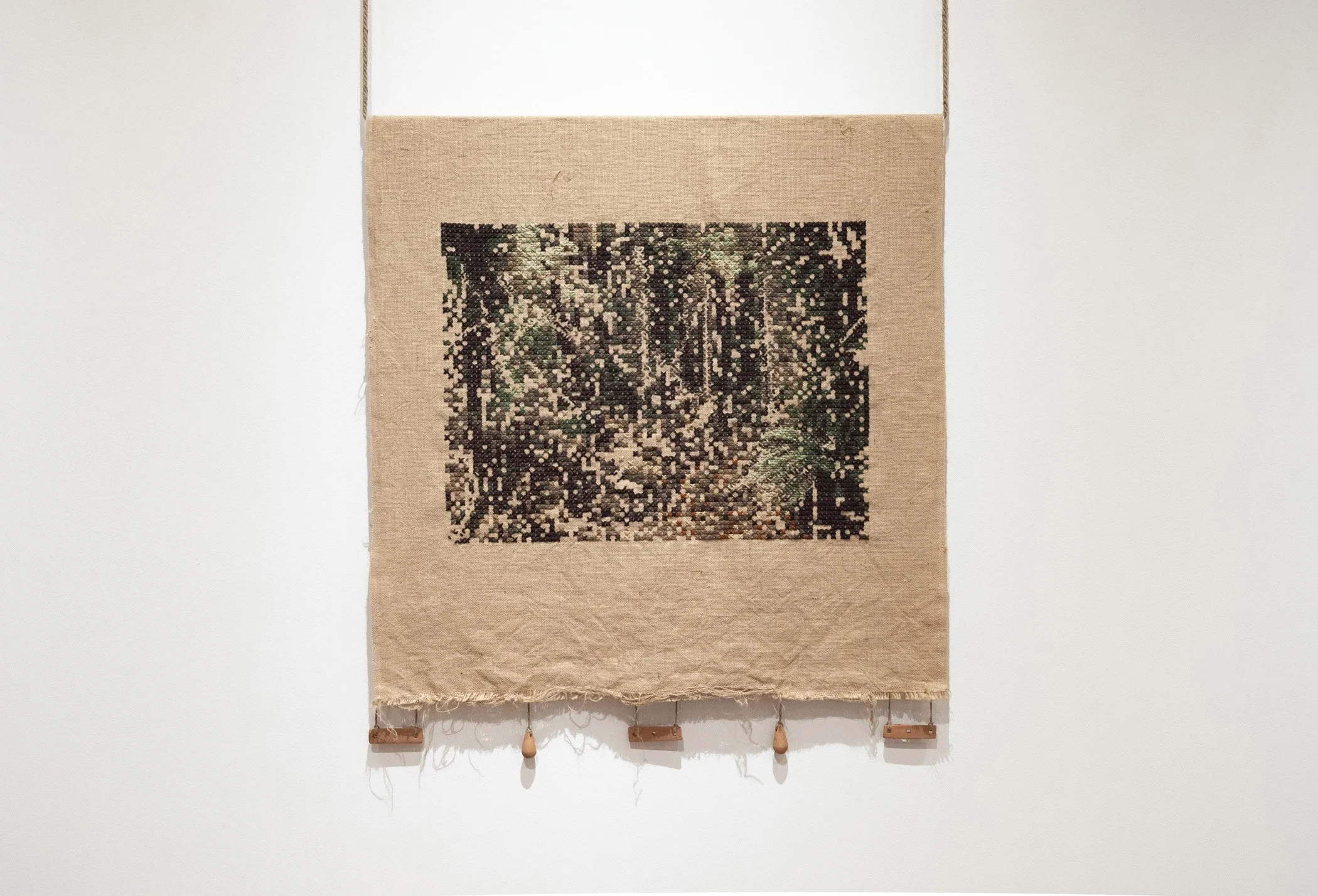
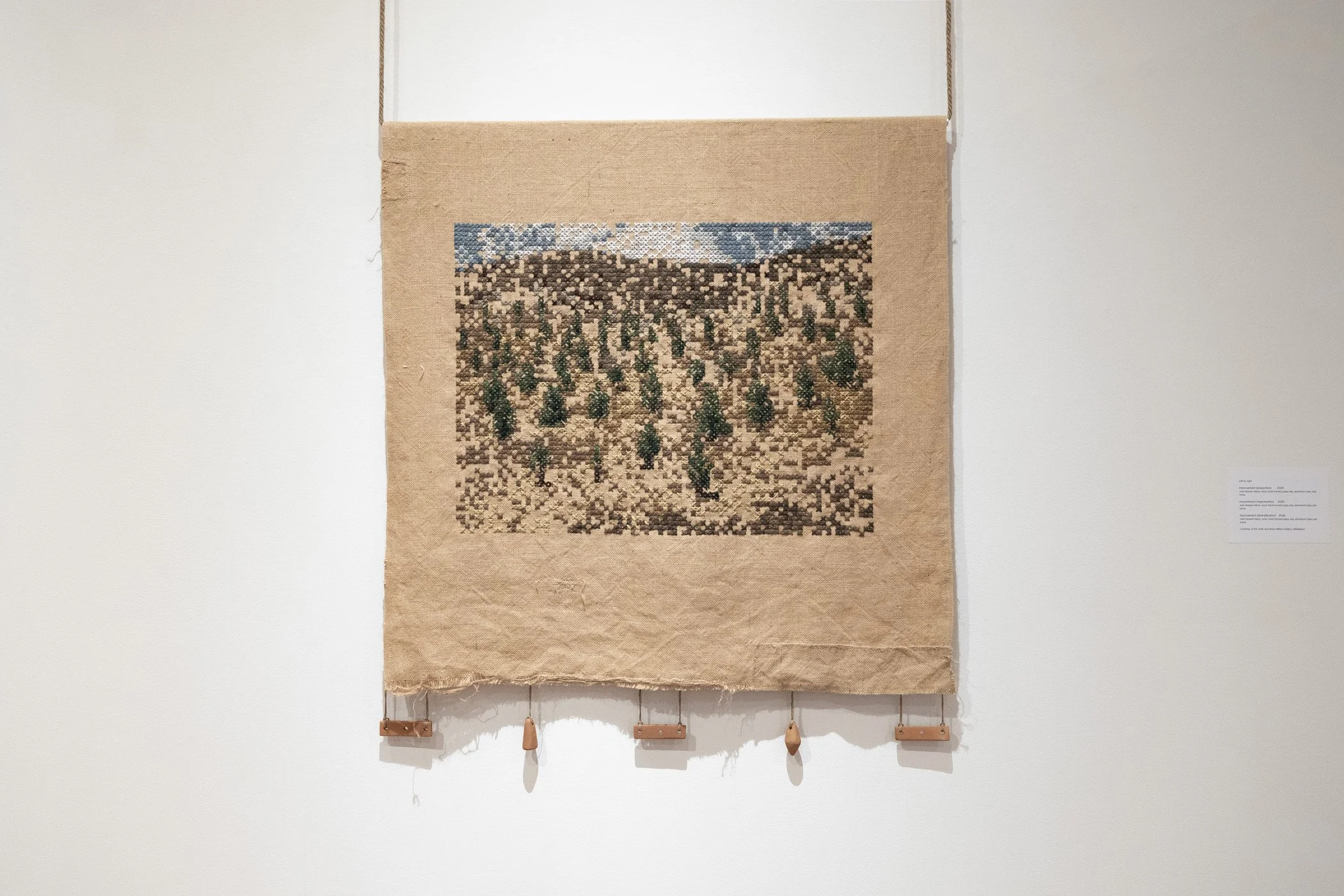
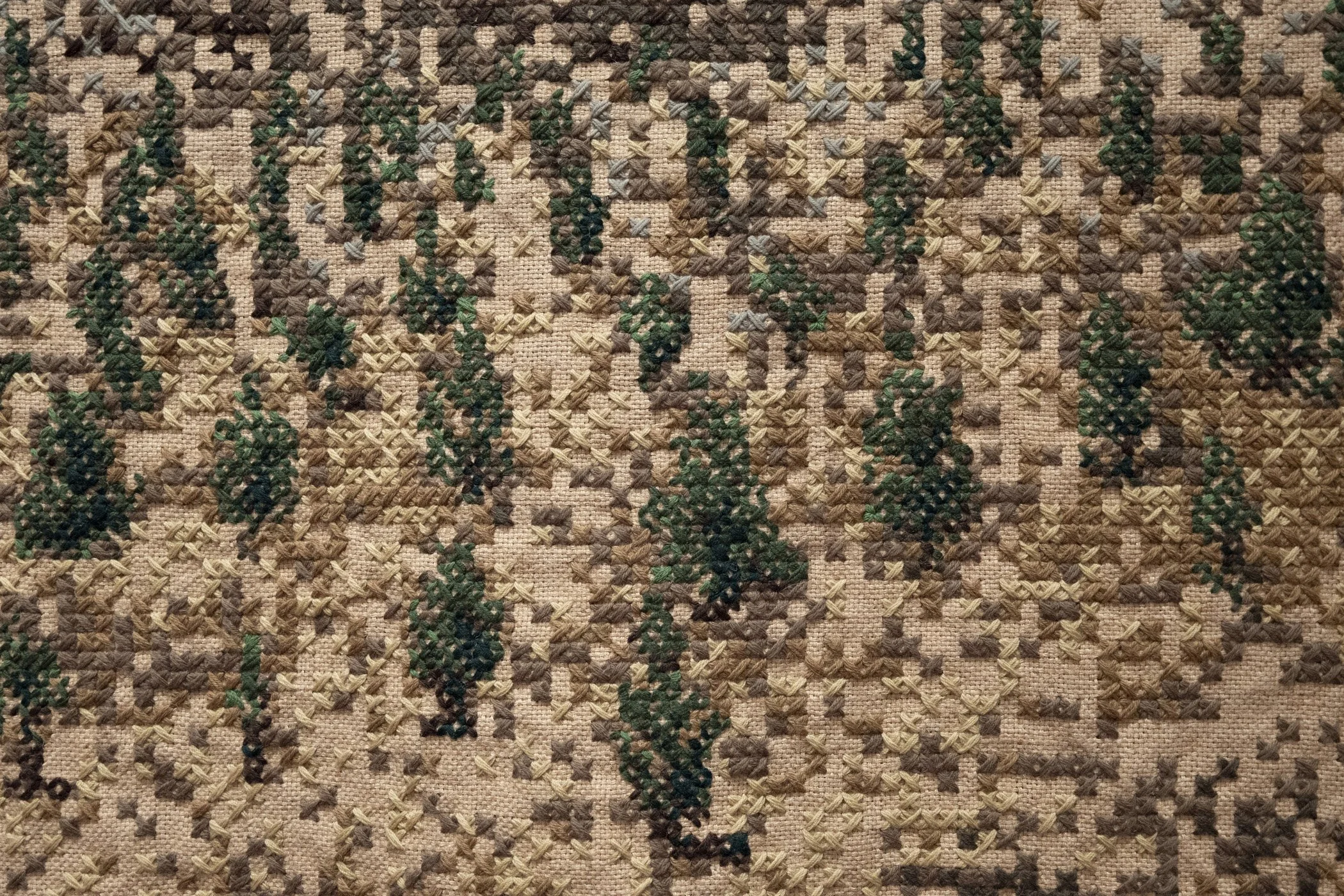
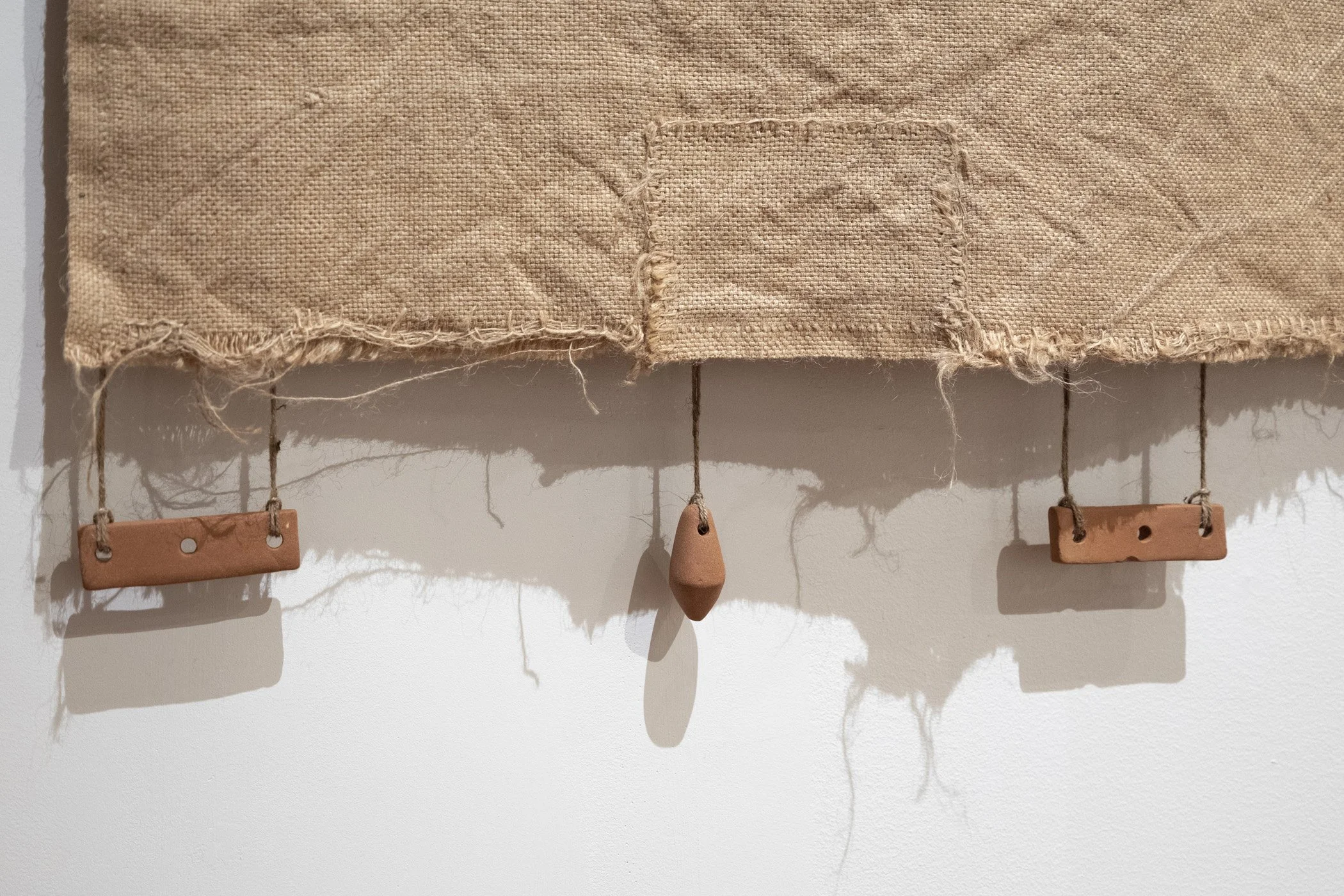
The large-scale cross-stitched wall works trace the various ways in which the land has been ‘improved’. Developed from the artist’s own photographs, the regenerative, productive and diversification efforts of those who care for and cultivate the land are purposely reproduced from a single-point perspective. On rough-hewn hessian the works negative spaces reveal the cyclical and constructed nature of our landscape.
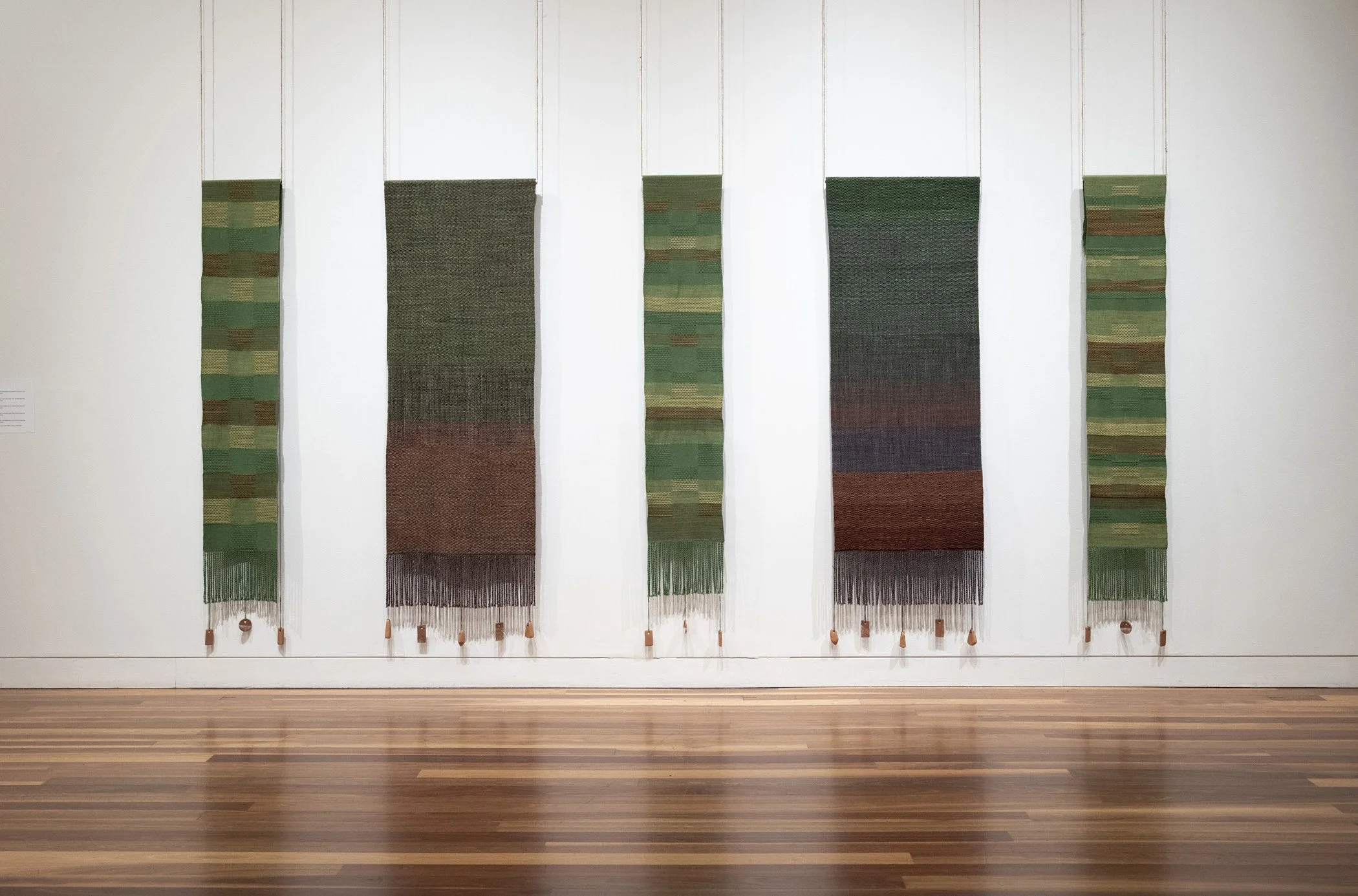
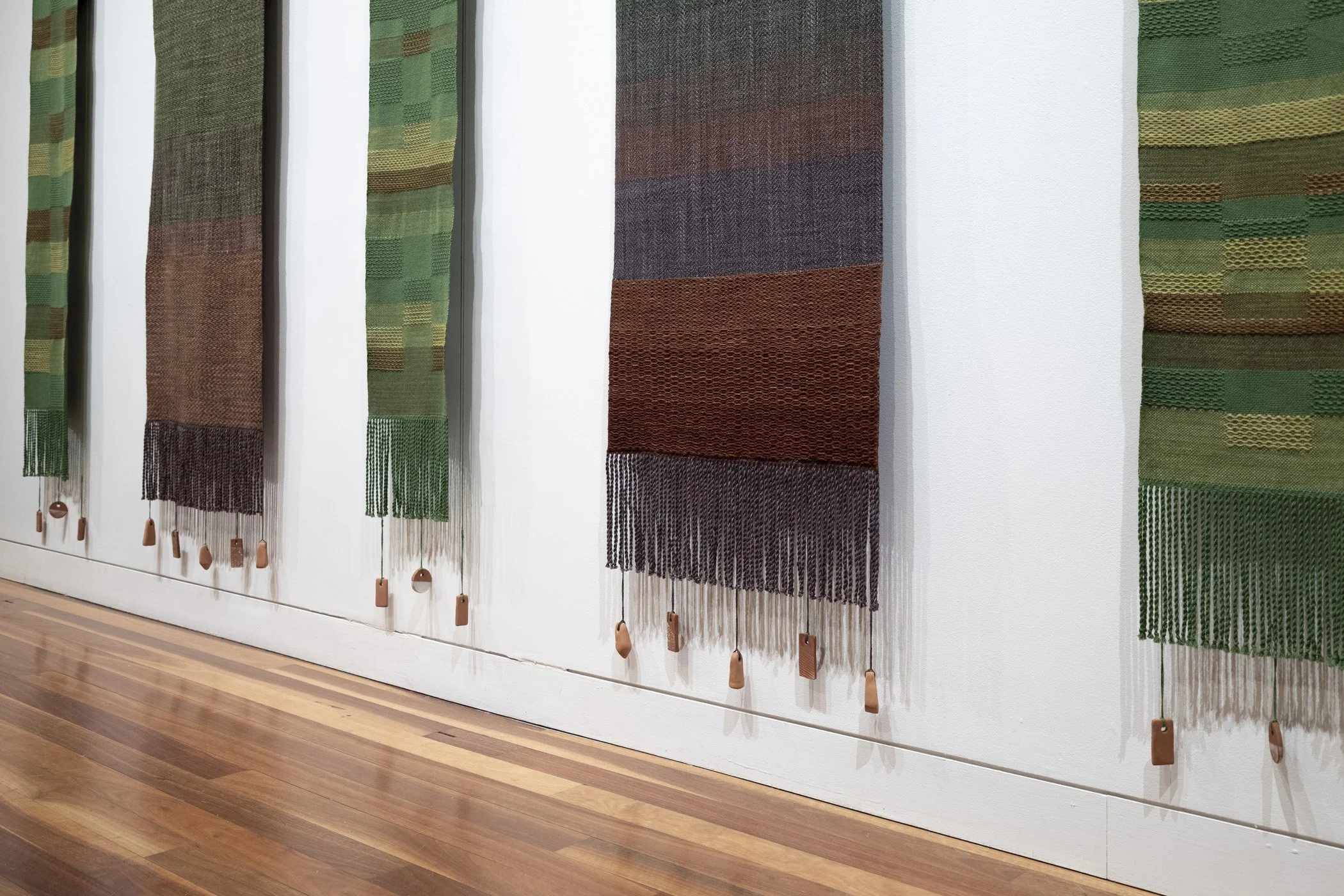
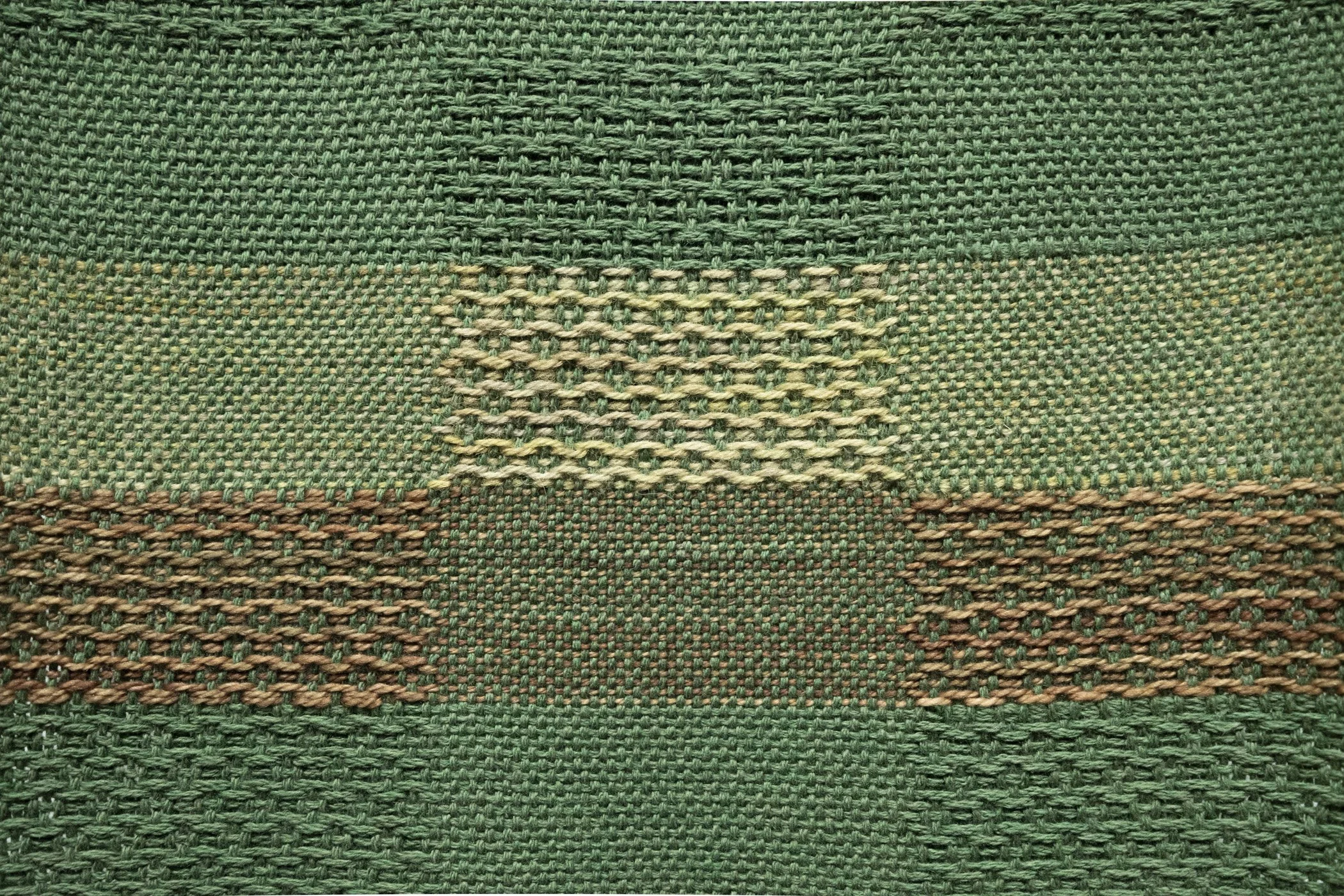
The woven wall hangings, Bush, Pasture and Pine, take these themes and expand on them vertically. The layers of the landscape have been built by McQuarrie over months, with wool specifically dyed to reflect the colours of the landscape. Their construction echoes the layered, methodical and time intense ways in which the landscape is constructed physically, historically and culturally.
‘The land, again’ does not seek to demonise cultivation practices or land use, but instead examines the ways in which the landscape, as opposed to the environment, is a concept that has been and continues to be constructed and manipulated by humans.
Sarah McClintock, Director, Aratoi Wairarapa Museum of Art and History
List of works:
Throwing the fleece. 2026.
Woven Aotearoa-grown Corriedale wool, hand-formed papa clay, aluminium tube, stainless steel frame, polyester cord.
360 x 180 x 400 cm
‘Throwing the fleece’ is a representation of a rolling hill-country landscape such as those created to raise sheep for wool production across Aotearoa New Zealand. Imported from Europe, this concept of landscape arrived with Pākehā colonial settler communities whose Christian worldview encourage them to ‘improve’ the land – to make it productive. Suspended from a stainless steel support and held in place by pottery weights made from papa clay, the surface of the ‘land’ is a thin layer woven from undyed white wool grown near Feilding. The grids woven into the fabric reference land sectioned into paddocks, while the pottery weights are formed into shapes similar to loom weights used since the bronze age.
Cross stitch works:
Improvement (production). 2026.
Jute hessian fabric, wool, hand-formed papa clay, aluminium tube, jute twine.
120 x 130 cm
Improvement (regeneration). 2026.
Jute hessian fabric, wool, hand-formed papa clay, aluminium tube, jute twine.
120 x 130 cm
Improvement (diversification). 2026.
Jute hessian fabric, wool, hand-formed papa clay, aluminium tube, jute twine.
120 x 130 cm
The ‘Improvement’ series depicts three landscapes historically associated with wool production and the ways their use is shifting as the economics of growing wool come under pressure. Developed from the artist’s own photographs, the images are depicted in expanded-scale cross stitch using wool yarn stitched into aged hessian sacking fabric held in place with pottery weights formed from papa clay. The images depict sheep farming pastures now considered ‘traditional’, regenerating native bush and a pine forest plantation, recognising the economic pressures farmers are under to make their land productive, alongside their actions as responsible stewards in regeneration of native ecosystems. The works reference the Christian concept of ‘improvement’, brought to Aotearoa with early Pākehā colonial-settlers, which sees land as a commodity that a moral person should work to make productive. Deliberately incomplete, the images reveal their own substrate as the hessian fabric shows through the image reminding us that all the landscapes depicted are artificial constructs.
Colour woven works:
Pasture I. 2026.
Woven Aotearoa-grown Corriedale wool, hand-formed papa clay, aluminium tube, jute twine.
32 x 185 cm
Bush. 2026.
Woven Aotearoa-grown Corriedale wool, hand-formed papa clay, aluminium tube, jute twine.
62 x 185 cm
Pasture II. 2026.
Woven Aotearoa-grown Corriedale wool, hand-formed papa clay, aluminium tube, jute twine.
32 x 185 cm
Pine. 2026.
Woven Aotearoa-grown Corriedale wool, hand-formed papa clay, aluminium tube, jute twine.
62 x 185 cm
Pasture III. 2026.
Woven Aotearoa-grown Corriedale wool, hand-formed papa clay, aluminium tube, jute twine.
32 x 185 cm
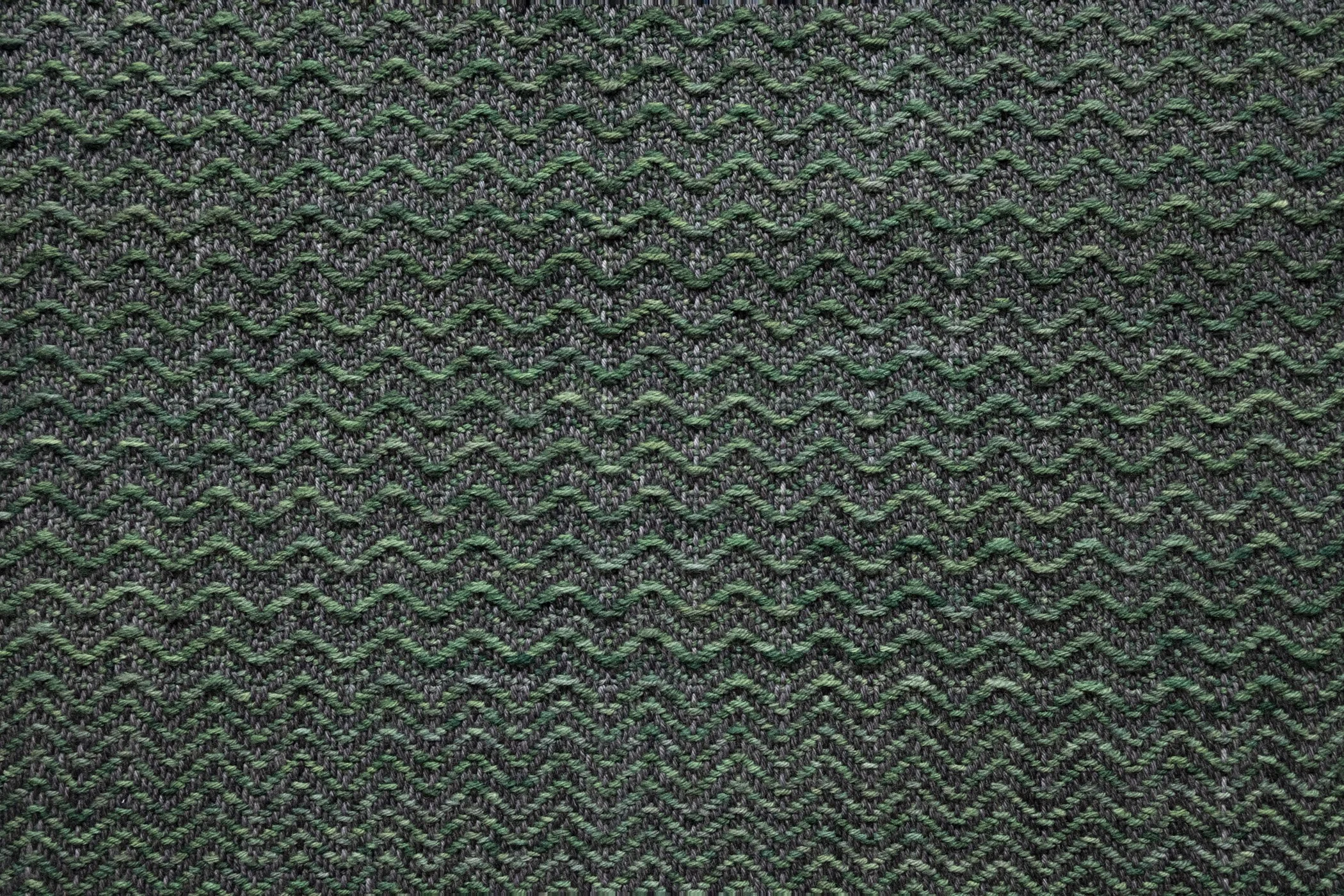
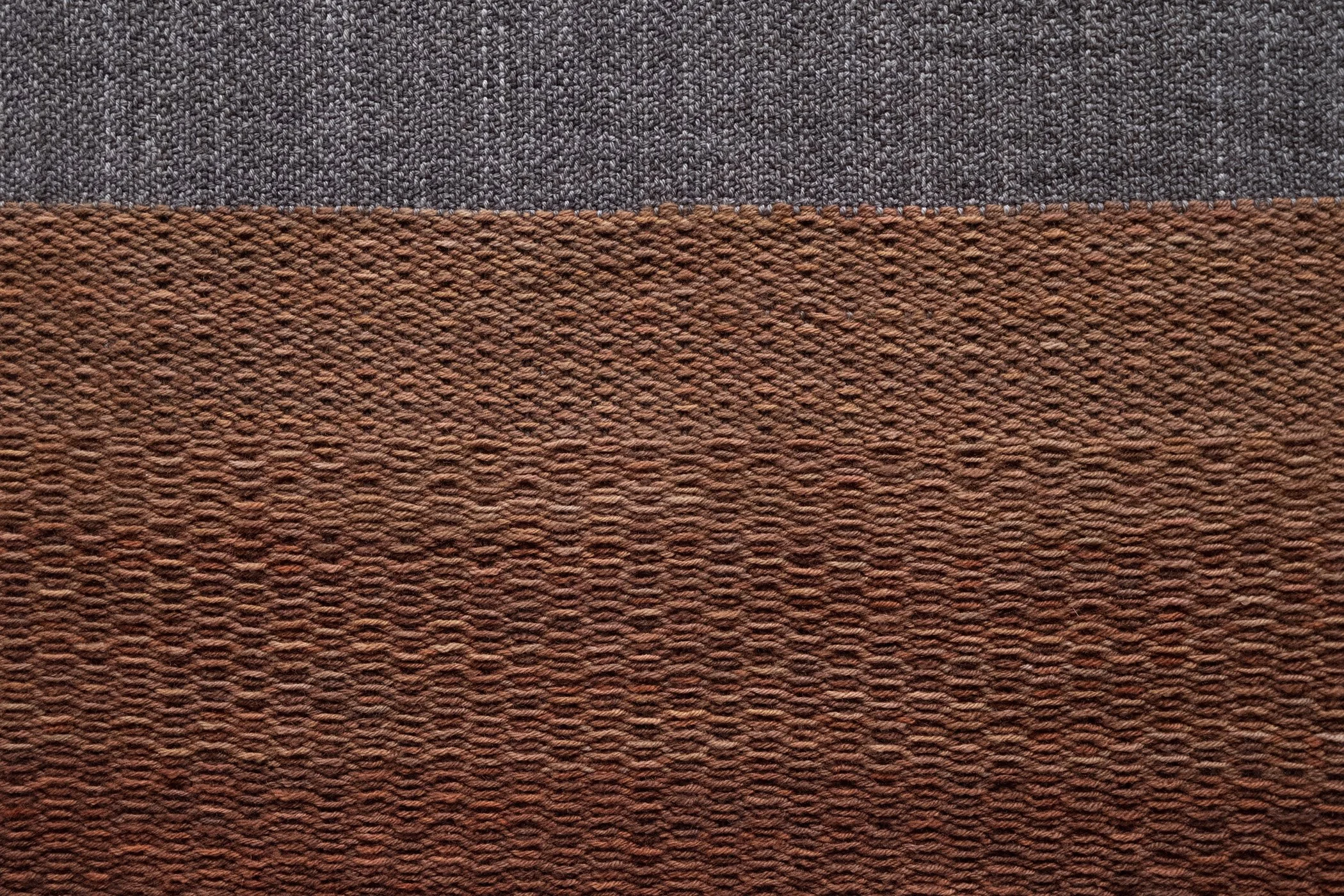
This series of woven works also depict pasture, regenerating native bush and pine forest. Taking a more abstracted approach these wall hangings also play on the perspective with which humans view landscape. Switching between an overhead and a horizontal view, we see paddocks from above and native and pine forests from an interior perspective, reminding us that how we view land and nature is often mediated by technologies. Woven from yarn dyed by @dyestockyarns the structure of the fabric echoes textures from each environment. The works are held in place by pottery weights hand formed into shapes used to hold warps on looms since the bronze age, referencing the long history of weaving and wool production in human civilisation.